
Three Practical Resources for Embracing Your Glimmers
Absorbing yourself in sensory delight, safety and connection

Glimmers can be thought of as the opposite of triggers. Instead of heralding unpleasant thoughts, feelings, and traumatic memories, they bring joy.
Deb Dana first used the term to describe “micro-moments of regulation that foster feelings of well-being.” Occupational therapist Bec Secombes went further, categorising them as “a satisfying sensory delight that fills someone with fervent ecstasy.”
Glimmers can be anything, and they’re unique to every individual. A glimmer to someone may be unpleasant or even a trigger to someone else. They can stimulate any sense, be they sounds, textures, sensations, tastes, smells, internal feelings, or sights.
They might bring back happy memories, transport us to a safe place, or make us feel a strong sense of joy or contentment. We may feel very connected or smiley. Anything or anyone can be a glimmer. They come from without and within.
Some Neurodivergent people can be more attuned to glimmers, just as they may be more responsive to triggers. It’s important to know your triggers, and knowing your glimmers is really useful too!
They don’t erase our triggers and aren’t about pretending everything is ok, but making space for glimmers and embracing moments of joy can be especially valuable during difficult times. These three resources may help you on that journey.
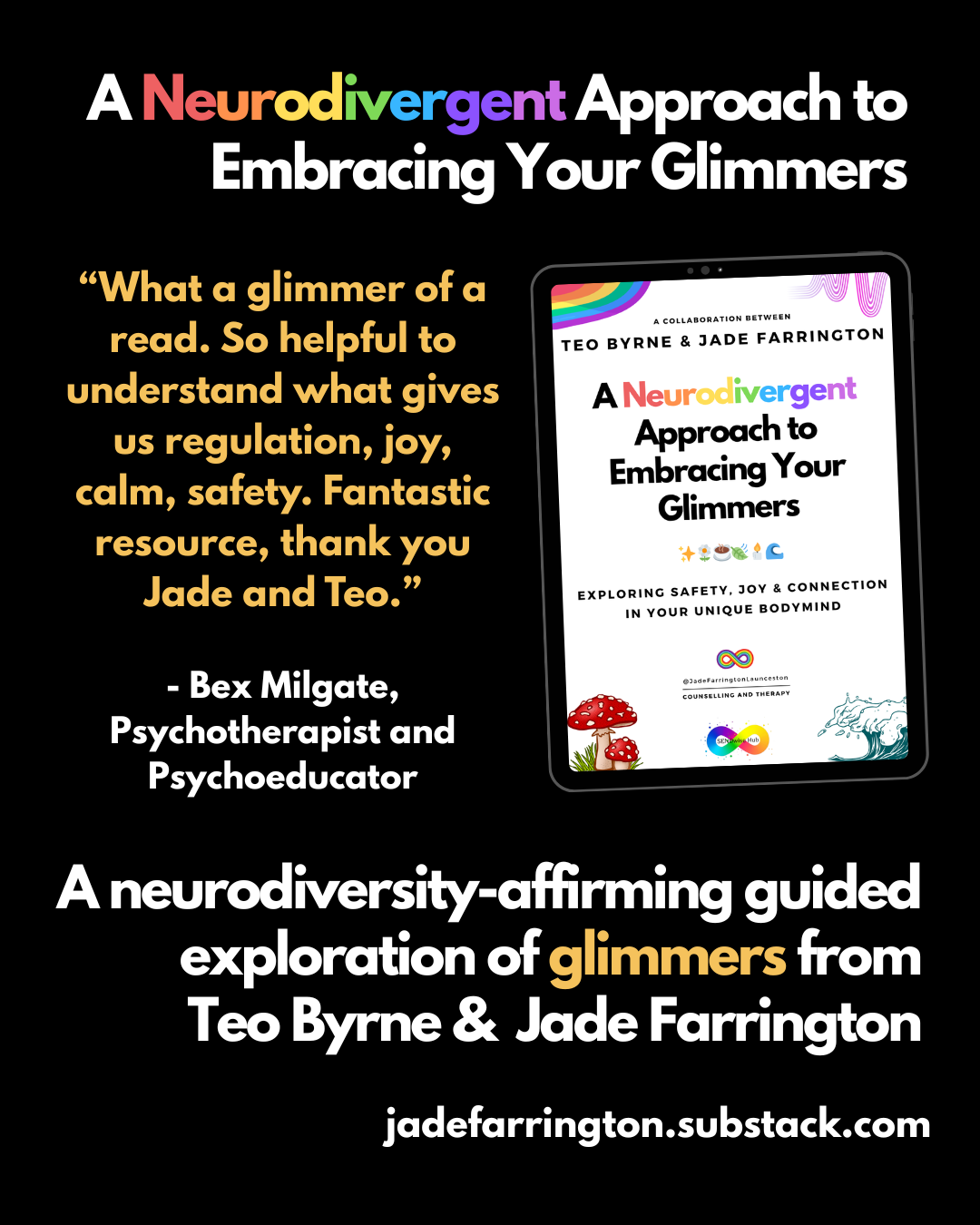
A NEURODIVERGENT APPROACH TO EMBRACING YOUR GLIMMERS
Ebook by Teo Byrne & Jade Farrington
The term ‘glimmers’ still isn’t widely known, but they’re something everyone experiences to a greater or lesser degree.
Many Neurodivergent people have sensory or processing differences which mean that glimmers may be more or less accessible.
Triggers might feel overwhelming, paralysing, frustrating, or isolating. Glimmers on the other hand, are the moments that can make you feel seen, heard and in tune with the world around you. These moments may be brief, but they’re powerful.
Glimmers are more intense than simple feel-good moments. They serve as powerful reminders that we are capable of thriving, even in a world that can sometimes feel overwhelmingly difficult. These moments of joy offer us, our children, and others around us, the opportunity to reconnect with ourselves and the world around us. Learning to find and embrace them can be a positive boost to our mental health and overall well-being.
Teo Byrne of NDwise Hub and I created this ebook to help people explore, understand and embrace their glimmers. It’s designed with Neurodivergent people in mind but can be utilised by neurotypicals too.
Paid subscribers can download it at the bottom of this email, or it can be purchased individually here.
GLIMMERS JOURNAL
Book, ebook and audio book by Deb Dana
“Once you learn to look for glimmers, you find they are all around, you pay more attention to them, and you naturally begin to look for more.”
- Deb Dana

If you enjoy journaling, recording, or spotting patterns then Deb Dana’s Glimmers Journal is designed to support you in becoming aware of people, places and events that bring glimmers via a six-step framework:
SEE - Find your cues
STOP - What are some glimmers you found?
APPRECIATE - Notice the feelings your glimmers bring
REMEMBER - What are you drawn to?
SHARE - What is a way you want to share your glimmers?
INTEND - Set an intention
The journal helps you to sort glimmers into five categories: nature; people and animals; art and science; embodied; and flavours. While it isn’t Neurodivergent-specific, it does not pathologise difference and recognises that “there is no right or wrong way - just the way of your nervous system.”
It can be worked through in chronological order; by category; or as glimmers appear for you.
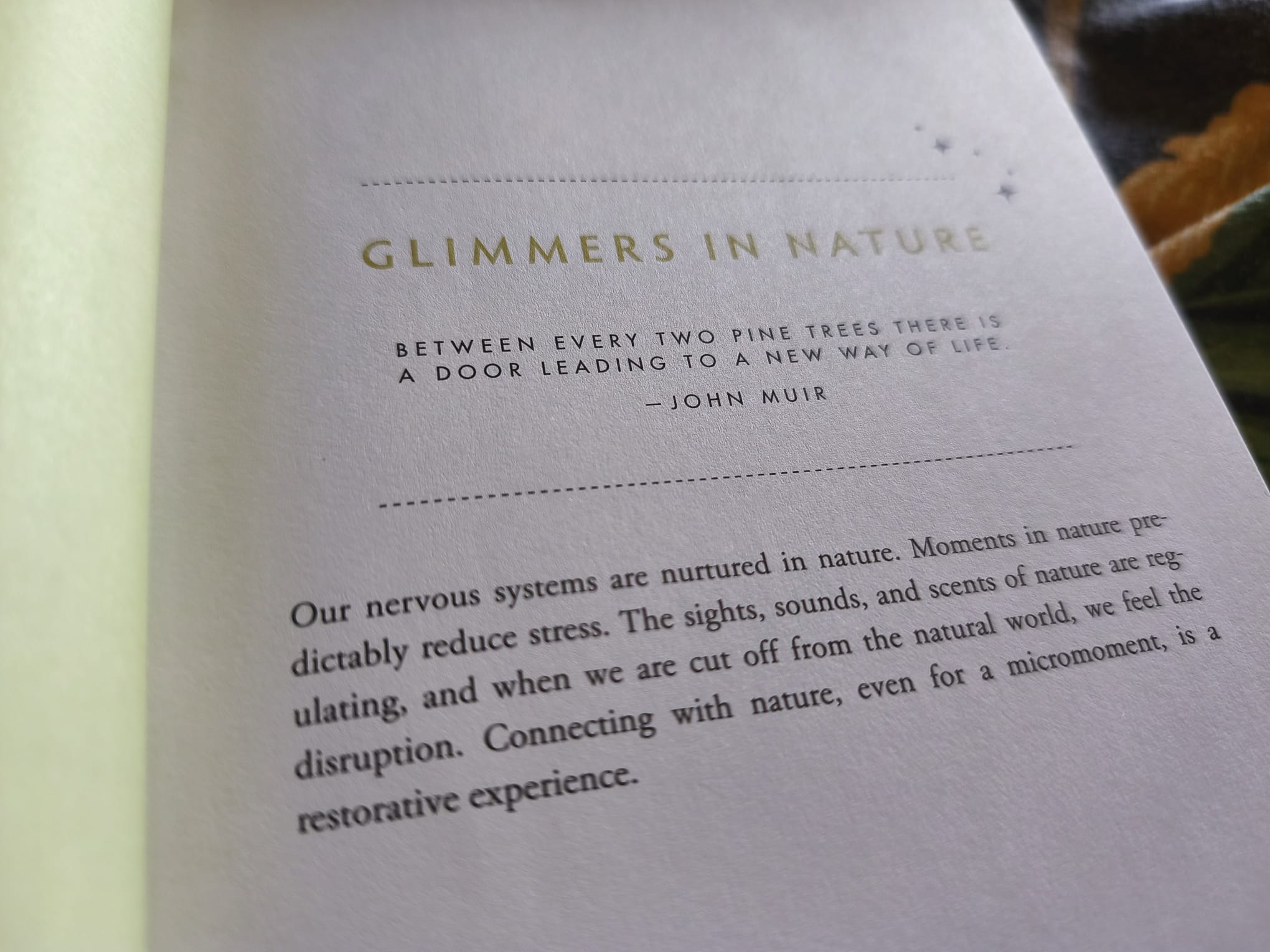
Deb Dana is best known for her work on polyvagal theory. The journal rounds off with an explanation of the autonomic nervous system and how it connects with glimmers.
THE SPECTRUM SLOTH GLIMMERS SOCIETY
Facebook group by Julie Webb

The Spectrum Sloth Glimmers Society Facebook group offers a friendly space to share your glimmers, and you can gain lots of inspiration from others if you’re trying to work out what your glimmers are.
The group is likely to be especially helpful for those who enjoy visual glimmers as members share lots of photographs and videos
, particularly in nature. This makes it a valuable resource for those who aren’t able to get out and about themselves, but appreciate images and shared joy with others.
“This group is a cosy nook to leave your troubles at the door, and to share those sparks of joy in your day-to-day life.”
- Spectrum Sloth
Work with me
What I offer:
Online counselling for adults (18+). Sessions usually take place weekly, fortnightly, or on an ad hoc basis.
Rewind trauma therapy for PTSD symptoms can be carried out as part of counselling work or as a stand-alone therapy.
One-to-one neurodiversity discussion for anyone wanting to understand more, and ad hoc clinical consultation and supervision around neurodiversity for counsellors, therapists, mental health practitioners, education professionals and others.
I offer a free, 15-minute online video call for anyone who is interested in supervision, counselling or rewind trauma therapy with me and would like to find out more.
Please get in touch via contact@jadefarrington.com