
Spotlight on Selective Mutism with Libby Hill, Speech and Language Therapist with Small Talk Speech and Language Therapy
‘It’s Part of His Autism, Isn’t It?’ Why selective mutism in autistic young people must be recognised, understood and supported

Libby Hill is a consultant speech and language therapist (SLT) with a fascination for autism, including PDA, selective mutism and developmental language disorder. She has been an SLT for 40 years and remains just as passionate about supporting children and young people.
Libby’s new book, Supporting Teenagers with Selective Mutism: A Practical Guide for Schools, Families and Professionals, is out now.
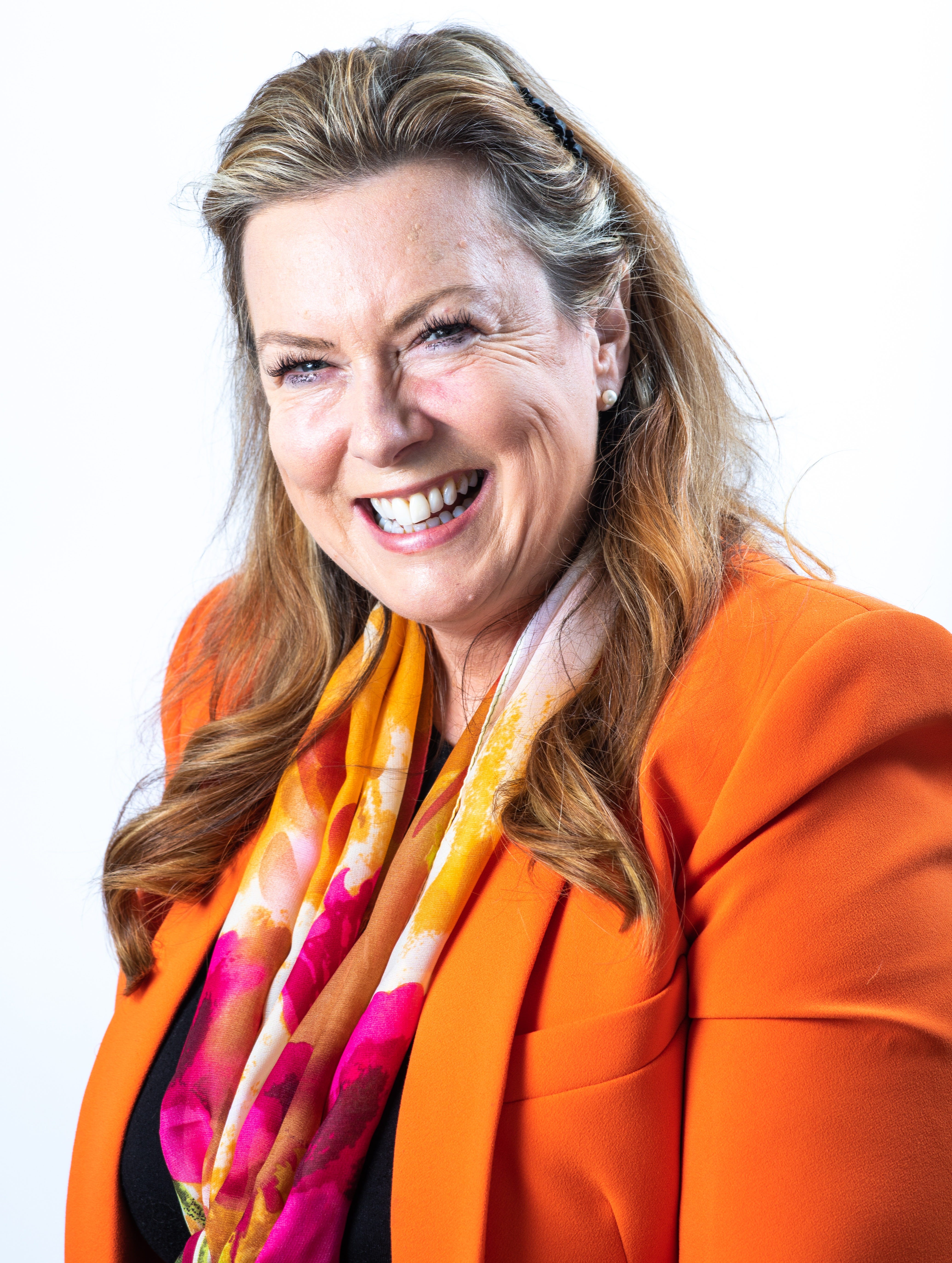
Libby writes…
“Autism may shape how selective mutism presents. It should never be used to make the difficulty—or the young person’s distress—disappear.”
When an autistic child or young person does not speak in school, in a shop, at an appointment or in front of unfamiliar people, somebody will often say: ‘It’s part of his autism, isn’t it?’
Sometimes the words are intended to reassure. Sometimes they reflect uncertainty about whether a separate diagnosis matters. At other times, they become a reason to stop looking: the child is autistic, autistic communication is different, and therefore the silence requires no further explanation.
But this apparently simple statement can hide something important. Autism may shape how a young person communicates, processes language, experiences sensory information and responds to other people. It can also change the way selective mutism presents. However, autism does not make distressing or disabling barriers to speech unimportant. Nor does it mean that a young person cannot also meet the criteria for selective mutism.
If we absorb every difficulty into the word autism, we risk missing the child in front of us. We may overlook anxiety, shutdown, sensory threat, trauma, language-processing demands or a learned expectation that speaking is dangerous. Most importantly, we may fail to provide the particular support that would allow communication to become safer and more accessible.
Autism and selective mutism can coexist
Selective mutism is an anxiety-based difficulty in which a person who is able to speak in some situations is consistently unable to speak in others. It is not a deliberate refusal. The child is not being rude, oppositional, manipulative or attention-seeking. In the moment, speech is unavailable.
Autistic people can, of course, have selective mutism. Historically, however, autism and selective mutism were sometimes treated as competing explanations: if a child was autistic, their lack of speech was attributed to autism; if they had selective mutism, clinicians sometimes questioned whether autism could also be diagnosed. This either/or thinking has never reflected the complexity of real children.
An autistic young person may speak freely at home about a favourite subject, joke with siblings and have a sophisticated vocabulary, yet be unable to answer the register at school, ask for help when hurt or speak during an assessment. Another may be able to speak to one trusted adult but not to peers. Some can talk when the interaction is spontaneous but become silent the moment they are directly questioned. Others manage at school through enormous effort and then lose speech at home when their capacity is exhausted.
These patterns deserve careful assessment. The question is not simply, ‘Can this child speak?’ It is, ‘Under what conditions is speech accessible, and what happens when those conditions change?’
Why it can be harder to recognise in autistic young people
Selective mutism does not always look like complete, obvious silence. This is especially true for autistic children and teenagers, whose communication may already be highly variable.
A young person may use rehearsed phrases, echolalia, humour, a babyish voice, animal noises or growling when ordinary spontaneous speech is unavailable. They may answer with a single word, nod, shrug, smile or say ‘I don’t know’ to bring an interaction to an end. Some become exceptionally skilled at avoiding situations in which speech will be expected. They may position themselves behind a parent, arrive late, look busy, allow a friend to answer or communicate through a phone. Others speak just enough to remain unnoticed, while never initiating, asking for clarification or expressing their true views.
High verbal ability can make the difficulty easier to dismiss. Adults may say, ‘But he talks for England at home,’ as though fluent speech in one safe setting proves that speech is equally available everywhere. It does not. Communication competence and communication performance are not the same thing.
Masking adds another layer. An autistic pupil may force out answers at school because compliance feels essential, while experiencing intense distress internally. Staff see speech and assume all is well; the family sees exhaustion, irritability, shutdown, physical symptoms or loss of speech afterwards. If assessment considers only whether words were produced, it misses the cost of producing them.
The Communication Performance Framework TM
The Communication Performance Framework helps us separate three related but different things: competence, access and performance.
Communication competence is what the person knows and can do: their vocabulary, language knowledge, ideas, social understanding and ability to formulate a message. Communication access is whether they can reach and use those abilities in a particular moment. Performance is what we observe on the outside.
This distinction is crucial. A child may have the competence to answer a question but be unable to access speech because the room is noisy, unfamiliar people are watching, the question is unexpected, processing time is short and their nervous system has moved into a threat response. Their observed performance may be silence, a shrug or a scripted answer. That performance should not be mistaken for a lack of knowledge, lack of interest or deliberate non-compliance.
For autistic young people, access may be affected by several interacting factors: sensory overload, uncertainty, language load, executive-function demands, interoceptive confusion, fear of getting the answer wrong, previous negative experiences, social exposure, fatigue and the need for control or predictability. Selective mutism may sit within this wider access profile. It does not need to be artificially separated from autism, but neither should it disappear inside it.
The most useful question therefore becomes: ‘What is preventing this young person from accessing communication here?’ That moves us away from blame and towards practical change.
Not every loss of speech is selective mutism
Recognising selective mutism in autistic people does not mean labelling every period of silence as selective mutism. Autistic people may experience reduced speech or temporary loss of speech for many reasons. During overload or shutdown, language formulation may become slower or speech may disappear. In burnout, overall communication capacity may be reduced for a prolonged period. Some people find speech unreliable and prefer AAC, typing, gesture or other forms of communication. Others may become silent in response to trauma, pain, catatonia-like symptoms or overwhelming language-processing demands.
This is why thoughtful differential assessment matters. We need a detailed developmental and communication history, information from more than one setting and, wherever possible, the young person’s own account. We need to explore when speech is available, when it changes, what the person experiences internally and whether the pattern is consistent with selective mutism. We also need to consider co-occurring language, speech, hearing, mental-health and sensory needs.
The aim is not to collect diagnoses for their own sake. A useful diagnosis provides an explanation, protects the young person from harmful interpretations and guides support. If the label does none of those things, our formulation is not yet good enough.
Why the distinction matters
When selective mutism is dismissed as ‘just autism’, several things can go wrong.
First, the child may be expected to speak because adults know that they can do so elsewhere. They may be prompted repeatedly, praised extravagantly for talking, questioned in front of others or told that they must ‘use their words’. These responses increase self-consciousness and pressure, making speech less accessible.
Second, silence may be interpreted as an autistic preference that requires no intervention. Respecting non-speaking communication is essential, but respect does not mean ignoring distress. A child who wants to join in, ask for help or speak to a friend but cannot do so needs support. The goal is not to make them appear less autistic. It is to widen their choices and reduce the barriers that trap them.
Third, schools may set inappropriate speech targets: answer three questions in class, speak to an unfamiliar adult or order independently in a café. A target may look measurable while still being clinically unsound. If safety, regulation and communication access have not been addressed, the target simply measures how much distress the young person can tolerate.
Finally, important safeguarding issues can be missed. A young person who cannot report pain, bullying, abuse, confusion or a need to leave is vulnerable. They need reliable ways to communicate immediately; speech cannot be the price of receiving help.
Start with safety, not speech
My SAFE-STEPS approach was developed because speech cannot sensibly be treated as the starting point. The foundations come first: safety and environment, regulation, and recognition of the young person’s emotional experience. Only then should we consider carefully graded exposure and speech elicitation, always within a broader aim of communication and participation.
This matters particularly for autistic young people. A conventional programme may focus narrowly on moving speech from one person or place to another. Yet if the classroom is unbearably noisy, demands are unpredictable, the adult relationship feels unsafe or the child is already in burnout, adding a speaking exercise is unlikely to help. The environment is not background information; it is part of the intervention.
Safety may mean having a predictable arrival, a named trusted adult, reduced public questioning, permission not to speak, access to a quiet space and clear plans for communicating basic needs. Regulation may involve movement, sensory support, recovery time and adults noticing early signs of overload. Emotional support means acknowledging how hard the situation is without making the young person discuss feelings on demand.
Exposure can be valuable when it is genuinely gradual, collaborative and consent-based. It should build from what already feels possible, with the young person retaining control. It must never become flooding, bribery or a test of obedience. A child’s nervous system cannot be argued into safety.
Communication must be available now
A frequent mistake is to treat alternatives to speech as a last resort, as though writing, typing, gesture or AAC will prevent talking. In reality, removing communication pressure often creates more safety. Alternative communication gives the young person agency while speech is unavailable.
Every pupil with selective mutism should have an agreed way to ask for help, report illness or pain, say no, indicate that they do not understand and contact a trusted adult. This might include a help card, visual scale, written note, tablet, messaging system, symbol-based AAC or a pre-agreed signal. The method must work under stress, not merely when the child is calm in a practice session.
Schools also need to distinguish participation from speaking. A pupil can demonstrate knowledge through typing, pointing, matching, recording at home, submitting a video, using AAC or working with a trusted adult. These are not easy options or ways of avoiding learning. They are access arrangements that allow competence to be seen.
Listen to autistic young people
In the work informing my book on selective mutism in teenagers, I drew on the experiences of 505 young people. Again and again, their accounts showed that adults often notice the absence of speech but fail to understand the experience beneath it. Teenagers described pressure, embarrassment, exhaustion, fear of attention and the frustration of knowing exactly what they wanted to say while being unable to say it.
Older pupils are particularly vulnerable to being misunderstood. Their silence may be described as a choice because they can speak to selected people. Their avoidance may be framed as defiance. Their use of a phone or a friend to communicate may be removed in the name of independence. Yet adolescence brings greater social scrutiny, more teachers, busier environments, oral examinations, presentations, work experience and growing expectations to self-advocate. The consequences of being unable to access speech become larger just as adults may become less sympathetic.
We must ask young people what helps, but we must also make it possible for them to answer. A face-to-face verbal conversation is not a neutral method of gathering the views of someone with selective mutism. Offer written questions in advance, messaging, rating scales, drawing, sorting cards, AAC or communication through a trusted person. Silence during a pupil-voice meeting is not evidence that the young person has no view.
What schools can do
Good support is not complicated in principle, although it requires consistency. Adults should reduce the sense of being watched and tested. Use comments rather than a stream of direct questions. Allow generous processing time, then continue naturally rather than waiting in conspicuous silence. Avoid asking the pupil to repeat a response for an audience or drawing attention to unexpected speech.
Agree a whole-school communication plan so the young person does not have to renegotiate their needs with every teacher. Identify one trusted adult, but do not make that person the only route to safety. Prepare for changes, supply written information beforehand and reduce unnecessary uncertainty. Teach staff that communication may fluctuate from lesson to lesson and that a difficult day does not erase previous progress.
Assessment and support should consider both autism and selective mutism. Autism-informed adjustments may include sensory accommodations, predictable routines, reduced language load, clear expectations, low-arousal interaction and recovery time. Selective-mutism support may include removal of speech pressure, carefully planned communication hierarchies and gradual expansion of comfortable communication. These approaches should be integrated around the individual, not delivered as two unrelated packages.
Where needs are significant, provision may need to be specified in an EHCP. Vague wording such as ‘access to support’ or ‘opportunities to develop confidence’ is not enough. The plan should state who will support the pupil, how often, what training staff require, how the environment will be adjusted, what non-speaking communication will be available and how progress will be reviewed without equating progress solely with spoken words.
Redefining progress
Speech is only one possible sign of progress. Before speech changes, a young person may begin entering the room more comfortably, staying for longer, communicating by text, showing humour, making choices, initiating through gesture, tolerating another person nearby or recovering more quickly after interaction. These changes matter because they show that access and participation are widening.
Even when speech increases, we should ask about cost. Is the young person speaking with less fear, or merely complying more effectively? Can they communicate something difficult, or only give rehearsed answers? Can they say no? Can they ask for clarification? Are they exhausted afterwards? Progress that depends on masking and collapse is not sustainable progress.
The long-term aim should be flexible, autonomous communication. For some, that will include increasingly available speech. For others, it will involve a reliable combination of speech, typing, gesture and AAC. Success is not normal-looking communication. Success is being able to connect, learn, participate, express identity and obtain help without overwhelming distress.
Beyond ‘just autism’
Autism is not a minor detail in the assessment of selective mutism. It may profoundly shape why speech becomes inaccessible and what support will be effective. But ‘it’s part of his autism’ must never become the end of the conversation.
The better response is curiosity. Is this young person silent because speech feels unsafe? Are sensory and processing demands consuming the resources needed for language? Is this shutdown, burnout, selective mutism or an interaction between several factors? What can the adults and environment change? What communication is available right now? What does the young person want us to understand?
A diagnosis should not divide a child into separate conditions, but neither should one diagnosis eclipse everything else. We need an integrated formulation that sees the whole person: autistic, anxious perhaps, communicating differently, capable, and doing the best they can under the conditions around them.
Communication is not something we simply possess. It is something we are able to do under particular conditions. Our task is not to demand performance and then judge the child when it disappears. Our task is to create the conditions in which communication—spoken or otherwise—can become safe, meaningful and possible.
Why I continue to use the term ‘selective mutism’
Please note I continue to use the recognised diagnostic term selective mutism, rather than situational mutism, because “selective” describes the selective pattern of situations in which speech is accessible—it does not mean that the person is consciously selecting when to speak. Retaining the recognised term also helps ensure consistency in diagnosis, research, professional guidance, EHCPs and access to appropriate support. However, I completely understand why some people feel that situational mutism better reflects their lived experience and avoids any suggestion of choice. Families and young people should use whichever terminology feels most comfortable and accurate for them; my decision to retain the diagnostic term should never override an individual’s preferred language.

Learn more from Libby
Small Talk Speech and Language Therapy website
Click to read other pieces in the ‘Spotlight on…’ series
 | A guest post by
|